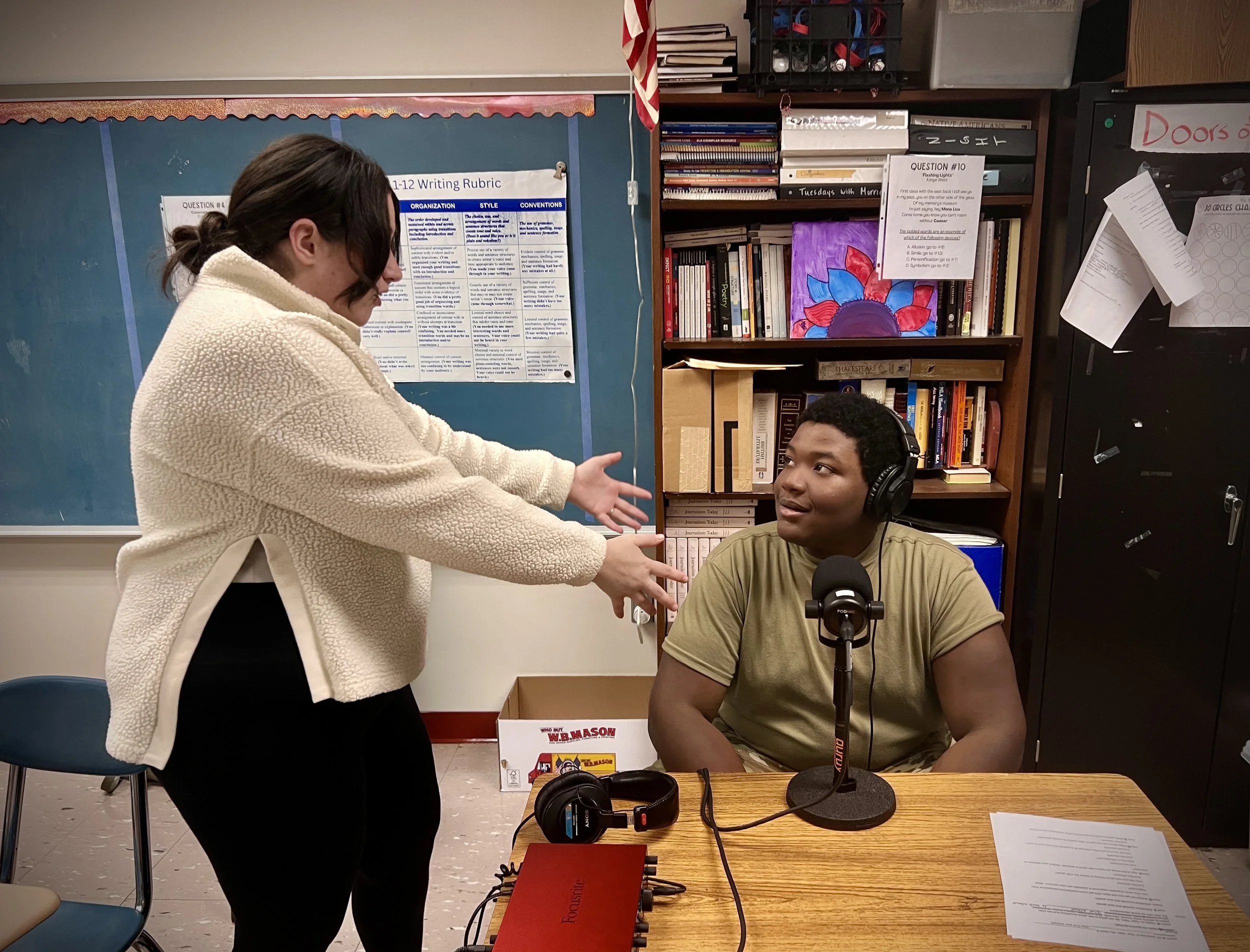
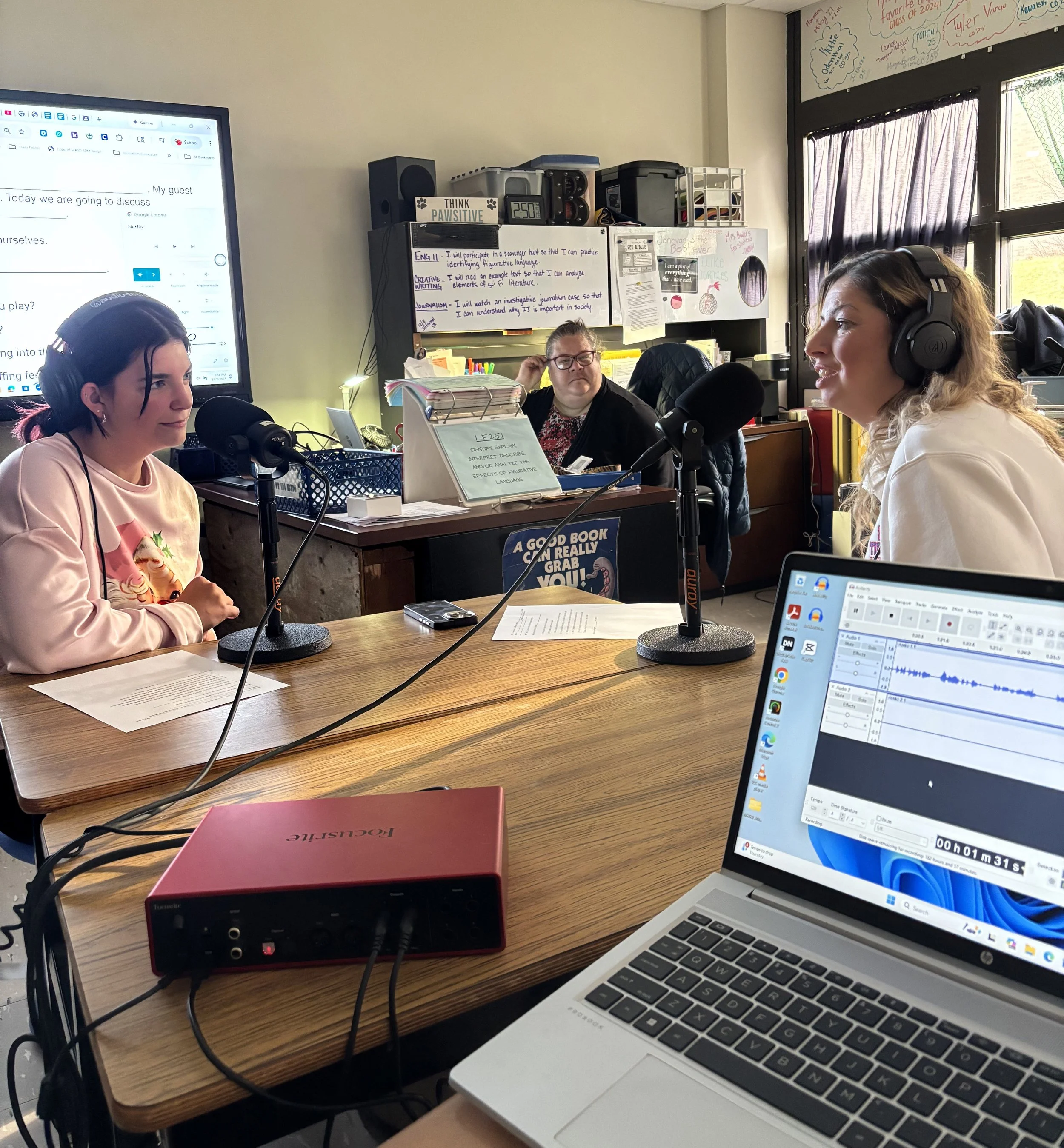
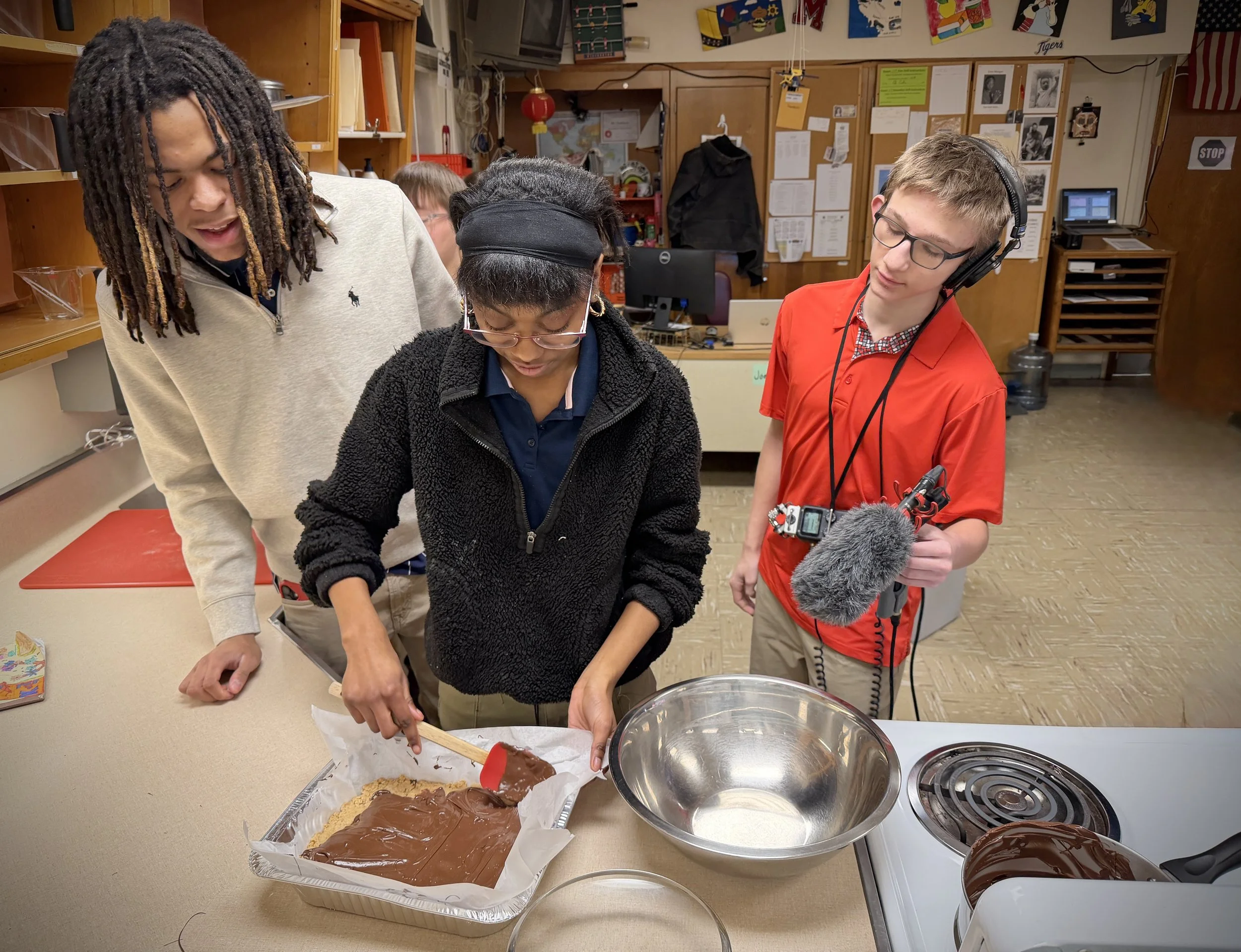
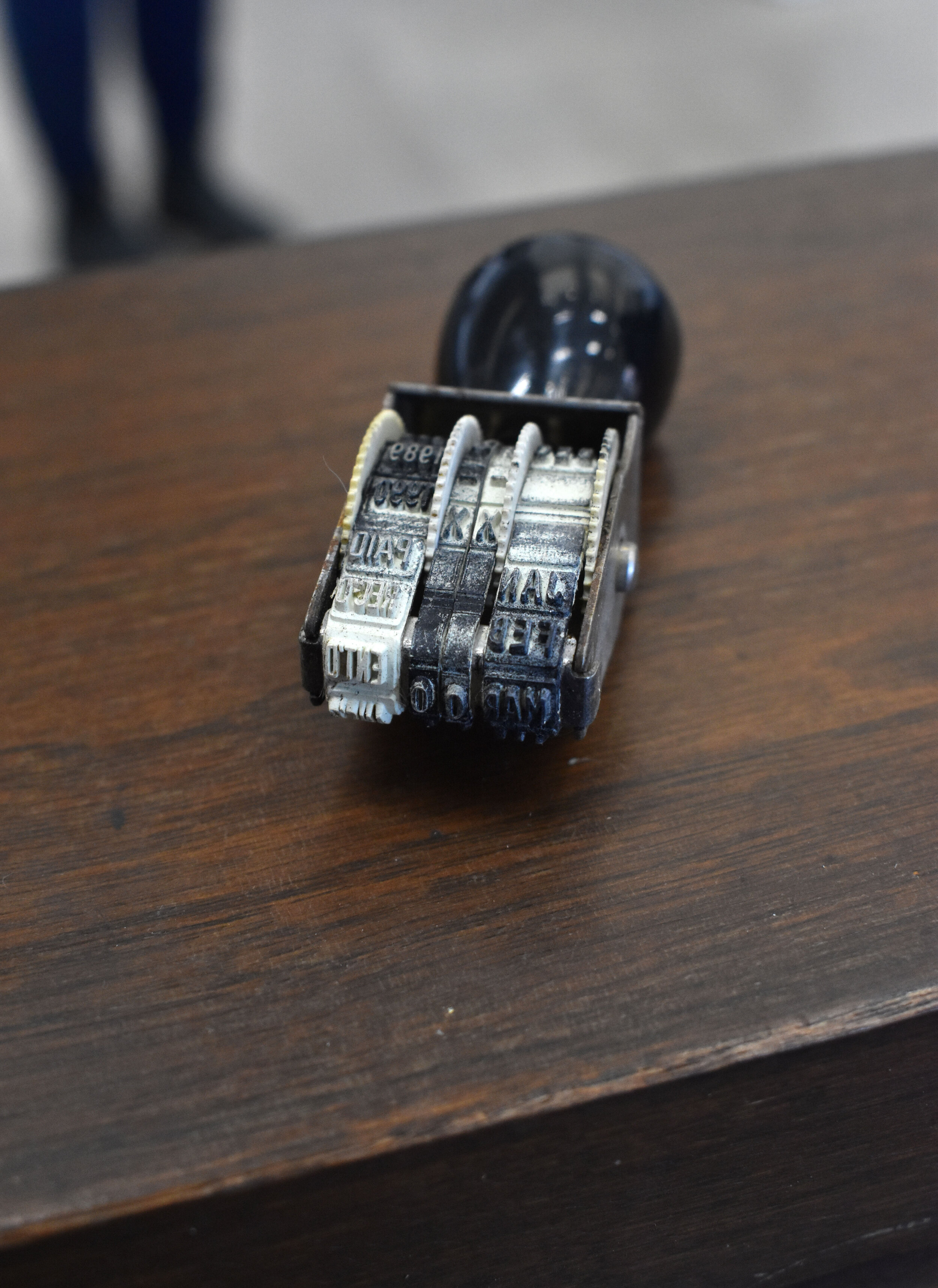
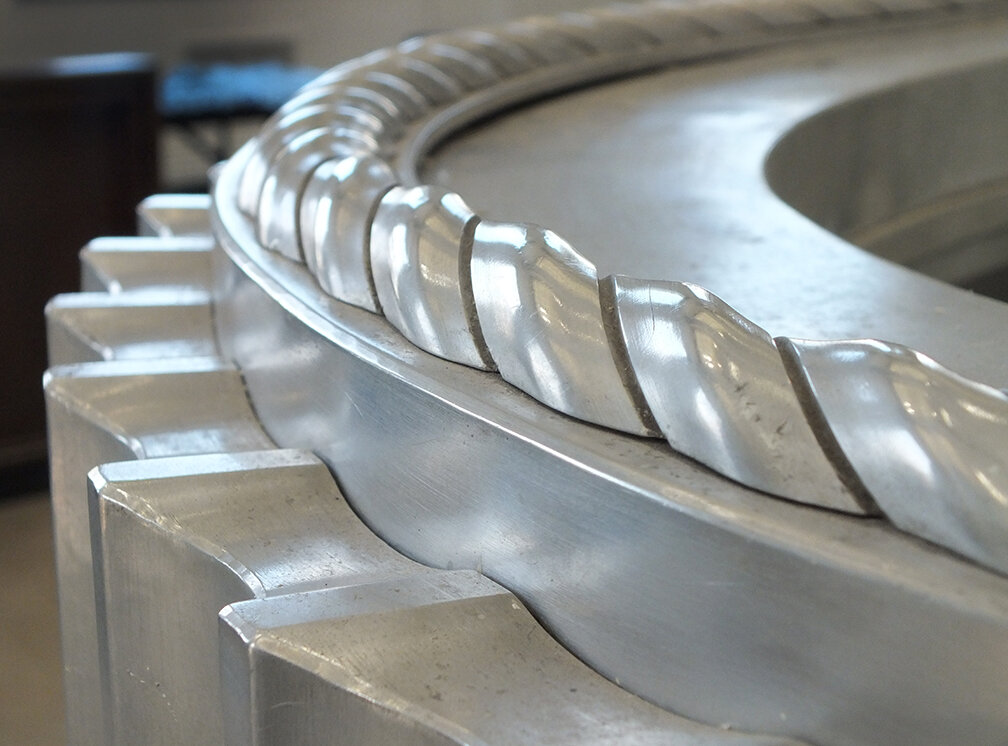
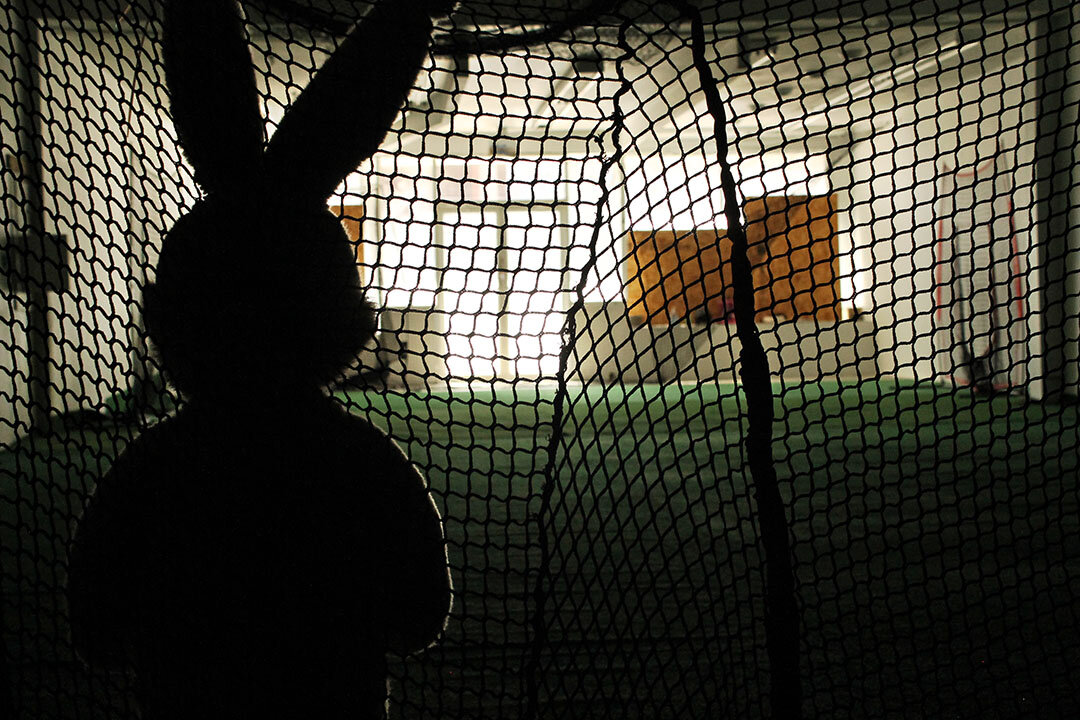
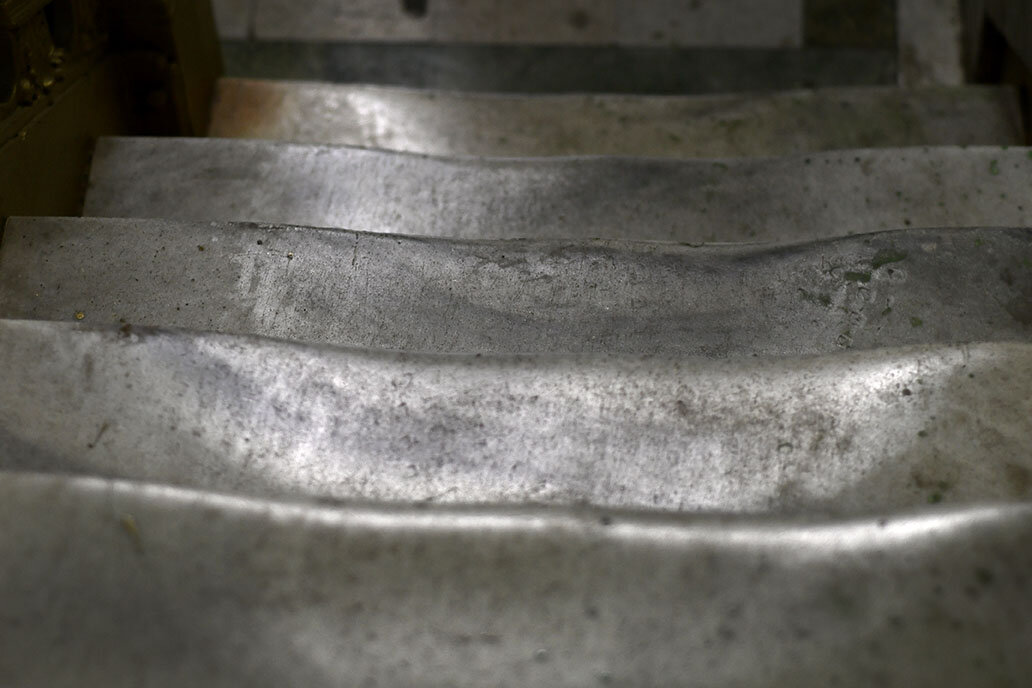
Journalists have the goal in narrative writing of taking readers, listeners and viewers to the setting of a news event. One way to do that is by writing using the senses. We took ourselves back to a favorite amusement park memory in this practice, just using one of the five -- see, touch, smell, hear or taste.
- Helen Fallon
Smell
I parked my car, shut off the ignition and climbed out. Kennywood parking lot smelled strongly of hot asphalt and exhaust. I slowly started to walk down the hill towards the park, passing all the hot cars baking in the midday sun. Near the entrance, I presented my ticket at the turnstile to the teenage boy who reeked of Axe body spray or something similar. It was an assault on my senses. Ok, I excitedly think, I’m almost there.
Walking around the winding pathways leading down to the tunnel I started to notice the damp musty aroma. The tunnel is the last step before entering the park. It’s always cramped and stuffed with hot sweaty bodies. Once it was flooded with water when I was there. I exit the tunnel and step into the bright sunlight. I breathe in the scent of hot sugar. Right in front of me is the cotton candy booth, which is right in front of the Fudge store. I worked in that sweatbox from hell for a few months because no one else wanted that job. I came home daily with sugar in my hair, and in my lungs, although I still loved working at the park.
I think I will ride first, then eat later. Although I’m sure I won’t last an hour because I am always hungry.
I ride the Old Mill because it is the closest. It’s wet, dark, damp, and pretty humid inside. The familiar musty aroma fills my nostrils as I start moving further inside the ride. How many people have been on this over the years I wonder as I float along? How old is this ride? I don’t mind the spiders, but the ride is fairly creepy.
After I exit the ride and begin to walk towards the Jack Rabbit. Unfortunately, I walked through a cloud of smoke and groan in disgust. Great, that pungent nicotine is going to trigger a migraine later. Ah, the joys of being sensitive to things. I tried to hold my breath and not inhale too much of it, but it was too late. The single horrible whiff already went straight to my brain.
I make a beeline over to the Jack Rabbit. It was sweltering hot, and everyone was sweating under the sun. The body odor was easily detectable when you are sandwiched in between hundreds of people in line. A few people were eating in line to pass the time which was smart. The lines were moving slowly today. The park was packed.
A woman about ten places in front of me was enjoying some Potato Patch fries. The slight whiff of the fries had me drooling. and I decided that was where I was headed next.
I didn’t even make it an hour and I was already jonesing for some food!
- Jennifer McCalla
Taste
The park was hot that day, so I ordered a Coke from the concession stand. The park’s need to extract a full year’s profits from a season lasting only a few months meant that my Coke was ice and water with the barest hint of soda syrup. The concession stand Coke did not have the acid bite of its bottled cousins, but it was wet, cold and refreshing.
My thirst quenched, I began to lust after a corn dog and Kennywood’s legendary Potato Patch fries. Making my way across the park, I joined the line that was longer than the queues leading to even the most popular rides. As I got closer to the window, the aroma of grease had my taste buds crying, “Are we there yet?” like 10-year-olds on a long car trip.
Once I placed my order, it took less than a minute to get my lunch. The rapidity of the service led me to wonder why the line was so long, but I knew the contents of the two rectangular paper trays in my hands were well worth the wait.
I made a quick stop at the condiment bar. Placing my corndog on top of my fries, I made room for a pool of Pittsburgh’s own Heinz Ketchup. I pumped the ketchup pump like I was blowing up a wading pool, until I had a supply to properly coat my corn dog and every single French fry.
Since I’m not a fan of mustard, I completed enhancing my repast with copious amounts of salt and pepper. Grabbing a handful of napkins, I set off in hope of finding an open table. I anticipated standing to eat my food, but the theme park gods smiled down on me and I found the Holy Grail, an actual table where I could sit down. It was even reasonably clean.
I swirled the tip of the corn dog in the pool of ketchup and took a big bite. I’m not sure that anything produced by the finest restaurant in Paris could produce a more delicious sensation in my mouth. The first bite of a corn dog is always the best. The first bite consists of the perfect proportions of corn breading, hot dog, grease and the vinegar tang of the ketchup. As my teeth sliced through the breading and reached the wiener’s skin, there was a satisfying “pop” and a burst of mouth pleasing steam. Pure junk food nirvana.
I savored that first bite and then moved on to the fries. I am a purest, so I believe cheese belongs on a cheeseburger, not on my fries. I order my fries as God intended them, dripping with grease, salty, flecked with pepper and begging for ketchup. My only regret was that I didn’t find any malt vinegar for my fries.
It is ironic that the British are the ones who have perfected the art of eating French fries. I used the first fries to stir the ketchup. Years ago, a coworker had taught me to add pepper to my ketchup, thus ensuring a more even distribution. After accomplishing this task, I lifted two of the long beauties to my mouth.
The explosion of flavor in my mouth made me happy to be alive and proud to be an American. It was that good. Potato Patch fries are the Lamborghini of the spud world. They are not crisp, and they are not limp. They just strike the perfect balance between the two extremes. They are deliciously greasy, but not soggy. They are firm on the outside but have a creamy baked potato texture inside. Add to this the spiced tomato richness of Mr. Heinz’s gift to the world, the primordially satisfying taste of salt, and the heat of the pepper and you have a feast worthy of Mt. Olympus or Valhalla.
I alternated between a bite of corn dog and a couple of fries. I considered returning to the line for another dog, as it soon became apparent that no matter how carefully I rationed my bites, the main course would be long gone before the last fry was swirled through the ketchup. I made a note for future visits to the park and resigned myself to my fate.
I slid the corn dog further and further up the stick until the last bite was consumed. As has been my habit since childhood, I nibbled the hard corn batter that forms at the bottom of the hotdog right off the stick, like a beaver snacking on a twig. Once my dog was gone, I focused my full attention on the remaining fries. Since I always overestimate the amount of ketchup, I had to fish the last few fries from the red pool remaining in the corner of the paper tray.
Once done I licked my lips, savoring the last vestiges of salt, pepper and ketchup left there. I wiped my mouth with a paper napkin and disposed of my trash. I have enjoyed many fine meals in some very fine restaurants, but few of them could ever come close to serving me a meal as satisfying and tasty as a Kennywood Corn Dog and Potato Patch fries!
- Jim Busch
Touch
As I enter Kennywood Park, I feel the rush to get on the rides although I have to work first. Even though I work in the shade and cool air, I am still cautious and use sunscreen, so I don’t get burned by the sun. I also make sure I put a mask over my face which can feel either loose or tight. Luckily, I can adjust the straps.
I punched in my ID number to start my shift as I walk to the Parkside Café. I push a cart around while putting napkins in their holders on the tables. First, it was tables and now it is the chairs. I have a wet rag to wipe down the table and chairs. I handle the glass plates, the silverware and put all the garbage in a bag. Before my shift was over, I take the cart to the back and wash it off with a powerful hose feeling the wet of the water. Once again, I punch out.
If I have time to spare, I will walk around the park and enjoy it in normal clothing. As I get on a ride, I can feel the seat as I wait patiently for the ride to get started. I can feel the seatbelt strap for my safety. I can also feel the safety bars for protection on the rollercoaster.
On Noah’s Ark I can feel the squishy tongue as I enter the whale’s mouth. I can feel the floors moving as I enter the boat while touching the walls, just in case I lose my balance. In the funny mirrors, I see me watching me smiling and laughing.
The next thing is that I am going to have fun with the games. I will play toss ball. I can feel the plastic balls being ready to be tossed. I also have fun at the Fish Pond, as I hold the fishing rod, I am excited to get a prize.
I’m ready for some food. With silverware in my hand, I eat a salad and can feel the cold drink as I take a sip. I can also feel the Potato Patch fries, the fluffy cotton candy, the corndog stick and the powder from a funnel cake.
After eating, I am ready to watch a show on the main stage or on the Kennyville Stage. I can feel the hot sun beating down on me. After the show I am ready to go back to the rides, but I still felt my stomach was ready to settle. Luckily there are calm and steady rides.
The first ride I feel would be cool and calming is the Old Mill. A calming boat ride is just the thing I need to stay cool and collected. After the Old Mill, I went on the Merry Go Round. It is a step up for me to get on the animal. The seat was hard, but comfortable. As the ride started, I felt a nice breeze on my face. It felt nice after being in the heat.
I am excited for the 4-D Theater and I was curious to know which movie was playing. The last movie I saw there was Rudolph the Red Nose Reindeer in the winter. I felt bubbles like it was snow. There was a bump in the back and water began sprinkling on me. It was great.
Since there is no movie being shown, I decided to go on the bumper cars for a little bit of fun and laughter. I even went on the auto race to cool off. The seat was hot, but it was worth it. The last ride that I would enjoy that day is the Raging Rapids for a nice cool wet ride since I don’t do the Pittsburgh Plunge. I can feel the wet seat, the seatbelt around my waist and the ring to hold on for safety.
The water was cold and refreshing splashing and going all over me. It felt good. When I got off the ride I was soaked. but I knew that the sun would dry me off. The sun was setting I felt the colder temperatures coming and I knew it was time to go home.
I am ready for rides, games and fun at Kennywood Park. I’m ready, ready, READY.
- Maria Palmer